Data Center Training Institute | Data Center Training with Real Projects
The demand for skilled IT professionals continues to grow as businesses rely on modern data centers to run applications, store data, and deliver online services. Organizations…

The demand for skilled IT professionals continues to grow as businesses rely on modern data centers to run applications, store data, and deliver online services. Organizations need experts who understand servers, networking, virtualization, storage, and cloud technologies. Choosing a Data Center training institute is one of the best ways to build these technical skills through practical learning. A professional training program not only teaches theory but also provides hands-on experience through real-world projects, helping students become job-ready from day one.
Whether you are a student, a recent graduate, or an IT professional looking to upgrade your skills, Data Center training offers an excellent opportunity to build a rewarding career. With practical lab sessions and industry-focused learning, you can gain the confidence to manage enterprise IT infrastructure effectively.
In this blog, you will learn what data center training is, why it is important, what skills you will gain, career opportunities, and how choosing the right institute can shape your future.
What Is a Data Center?
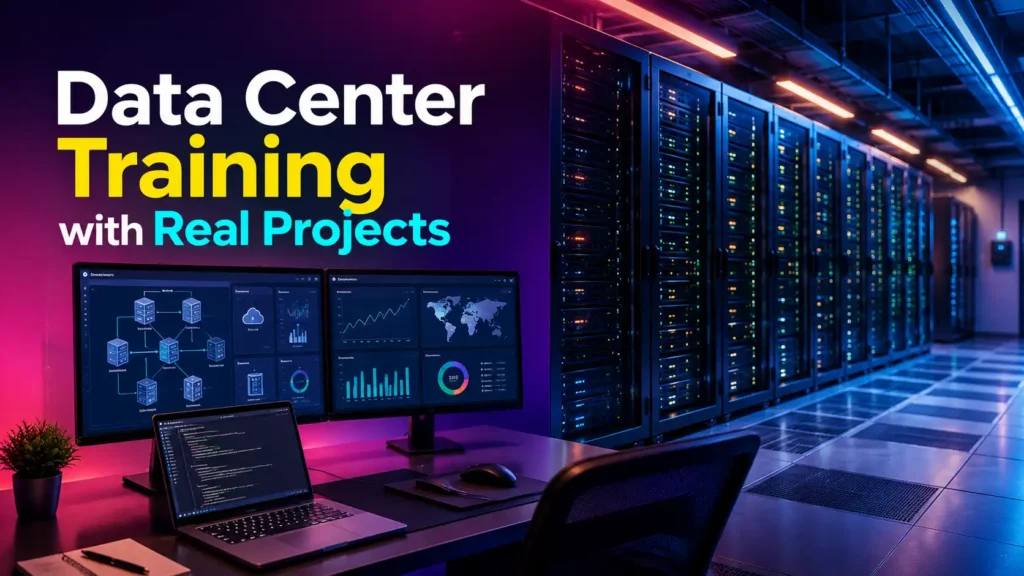
A data center is a facility that houses servers, storage devices, networking equipment, and security systems. It supports websites, cloud services, business applications, databases, and enterprise operations.
Every time you access a website, send an email, or use cloud storage, a data center works behind the scenes to process and store your information.
Modern businesses depend on reliable data centers to keep their operations running smoothly.
Why Data Center Training Is Important
Managing enterprise infrastructure requires technical knowledge and practical experience.
Professional Data Center training helps learners understand how different technologies work together inside a modern IT environment.
Some major benefits include:
- Learning enterprise infrastructure
- Understanding server management
- Gaining networking knowledge
- Improving troubleshooting skills
- Learning virtualization technologies
- Building cloud computing foundations
These skills are highly valued by employers across multiple industries.
Why Choose a Data Center Training Institute?
Selecting the right Data Center training institute provides structured learning and practical exposure.
A quality institute usually offers:
- Experienced trainers
- Live server environments
- Real-time projects
- Practical laboratory sessions
- Industry-standard tools
- Placement assistance
- Interview preparation
Hands-on experience helps students understand enterprise environments more effectively than theory alone.
What You Will Learn
A professional Data Center training program covers several important technologies.
Server Administration
Students learn to install, configure, and manage enterprise servers.
Topics include:
- Windows Server
- Linux Server
- Active Directory
- User management
Networking
Networking forms the backbone of every data center.
Training covers:
- IP addressing
- Routing
- Switching
- DNS
- DHCP
- Firewalls
Virtualization
Virtualization allows multiple virtual machines to run on one physical server.
Students learn:
- VMware ESXi
- VMware vCenter
- Virtual machine management
- Resource allocation
Storage Management
Enterprise storage is another critical component.
Topics include:
- SAN
- NAS
- RAID
- Backup solutions
Cloud Fundamentals
Many organizations use hybrid cloud environments.
Training introduces:
- Cloud computing basics
- Virtual infrastructure
- Cloud storage
- Cloud networking
Real Projects Make the Difference
One of the biggest advantages of joining a professional Data Center training institute is working on real projects.
Practical projects help students learn how to:
- Install servers
- Configure networks
- Deploy virtual machines
- Manage storage
- Monitor infrastructure
- Troubleshoot technical issues
Real-world experience improves confidence and prepares learners for job interviews.
Skills You Will Develop
During Data Center training, students build valuable technical skills.
These include:
- Server management
- Network administration
- Virtualization
- Storage configuration
- Infrastructure monitoring
- Security basics
- System troubleshooting
- Documentation
These skills remain useful throughout an IT career.
Who Should Join Data Center Training?
This course is suitable for:
- Fresh graduates
- IT students
- System administrators
- Technical support engineers
- Network engineers
- Cloud professionals
- Career changers
Even beginners can start learning with basic computer knowledge and a willingness to practice.
Career Opportunities
Completing Data Center training opens the door to many exciting job roles.
Popular career options include:
- Data Center Engineer
- System Administrator
- Network Administrator
- Infrastructure Engineer
- Cloud Support Engineer
- Technical Support Engineer
- Virtualization Engineer
Organizations continue hiring professionals with practical infrastructure skills.
Why Employers Prefer Practical Experience
Companies value candidates who can work confidently in enterprise environments.
A good Data Center training institute prepares students through:
- Hands-on lab sessions
- Live infrastructure practice
- Enterprise scenarios
- Real troubleshooting exercises
These experiences reduce the learning curve when joining a new organization.
Tips for Success in Data Center Training
If you want to become successful, follow these simple tips:
- Practice every day.
- Learn networking fundamentals.
- Build a virtual lab.
- Understand operating systems.
- Practice troubleshooting.
- Stay updated with new technologies.
Regular practice strengthens your technical knowledge.
Common Mistakes Beginners Should Avoid
Many beginners face challenges during training.
Avoid these common mistakes:
- Skipping practical sessions
- Ignoring networking concepts
- Memorizing without understanding
- Avoiding troubleshooting
- Not documenting configurations
Learning by doing is always more effective than learning by reading alone.
Future Scope of Data Center Technologies
The future of data centers continues to grow with technologies such as:
- Cloud computing
- Artificial Intelligence
- Edge computing
- Hybrid infrastructure
- Virtualization
- Automation
Professionals trained in these technologies will remain in high demand for many years.
Why Real Projects Matter
Working on live projects allows students to understand how enterprise environments operate.
Real projects improve:
- Technical confidence
- Problem-solving ability
- Practical experience
- Team collaboration
- Interview performance
Employers often prefer candidates who have practical exposure before joining the workforce.
Conclusion
Choosing the right Data Center training institute is an important step toward building a successful IT career. With structured learning, experienced trainers, and hands-on practice, students develop the practical skills required to manage enterprise infrastructure confidently.
A professional Data Center training program combined with real projects prepares learners for today’s competitive IT industry. Whether your goal is to become a system administrator, cloud engineer, network administrator, or infrastructure specialist, investing in practical data center training can open the door to exciting career opportunities and long-term professional growth.
Discover more from RealTech IT Academy
Subscribe to get the latest posts sent to your email.