Data Center Training Institute | Data Center Basics for IT Beginners
Data centers support many services we use in the digital world. Businesses depend on them to store information, run applications, manage networks, and provide online services….
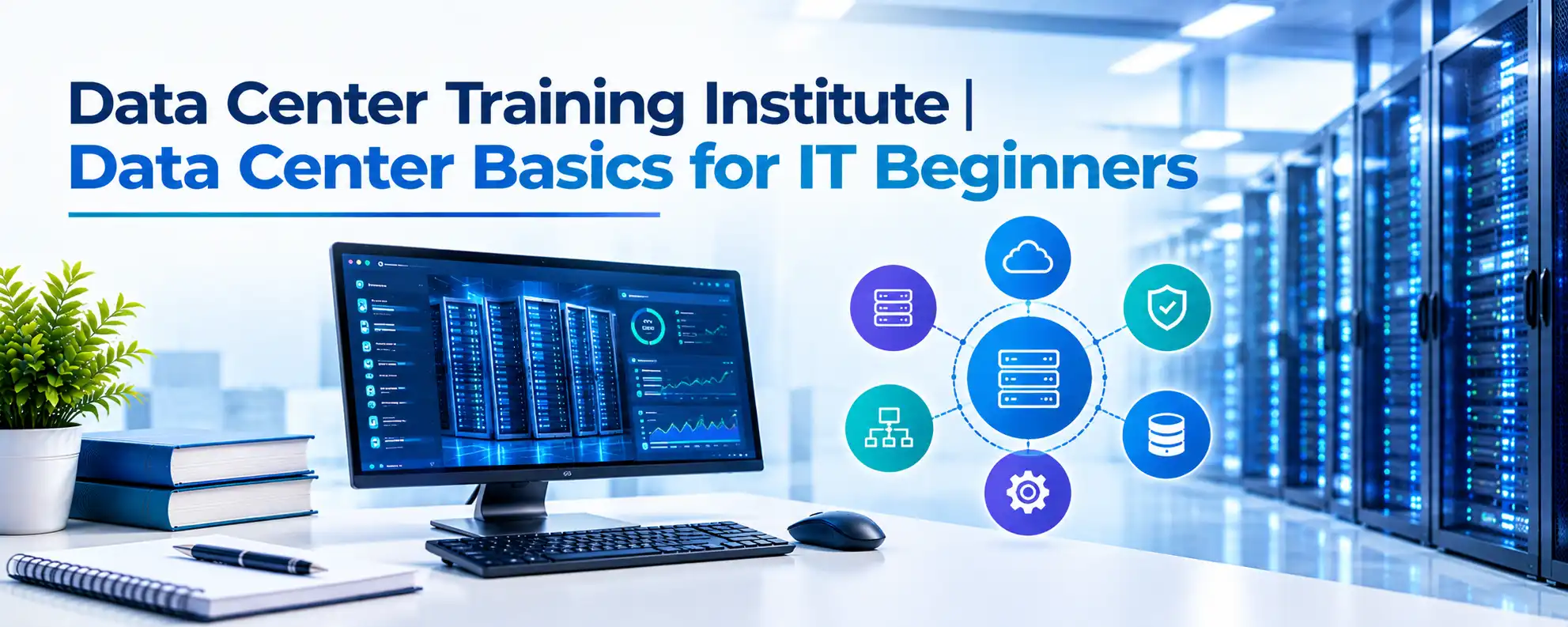
Data centers support many services we use in the digital world. Businesses depend on them to store information, run applications, manage networks, and provide online services. Industries such as banking, education, healthcare, and e-commerce use data center infrastructure to manage their IT operations. Students who want to start a career in IT can learn these skills through a Data Center training institute that offers technical lessons and hands-on lab practice. Learning how data centers work helps beginners understand server management, networking, storage, security, and infrastructure operations.
What Is a Data Center?
A data center is a facility that contains computer systems, servers, storage devices, networking equipment, and other IT resources. Organizations use these facilities to store, process, and manage large amounts of data.
A data center has several components that work together to support business operations.
- Servers: Run applications, websites, databases, and business software.
- Storage Systems: Store company files, databases, backups, and other data.
- Networking Equipment: Connect servers and enable communication between systems.
- Power Systems: Supply electricity to IT equipment and keep systems running.
- Cooling Systems: Control the temperature and protect equipment from overheating.
- Security Systems: Protect the facility and IT infrastructure from unauthorized access.
Each component has a specific role in data center operations. Professionals need to understand how these systems work together to keep services running and protect business data.
Why Should IT Beginners Learn Data Center Basics?
The IT industry depends on reliable infrastructure. Companies need professionals who understand servers, networks, storage, power systems, and monitoring tools.
Learning data center fundamentals can help beginners understand the technical environment behind cloud platforms, websites, business applications, and enterprise systems.
A structured Data Center training institute can introduce these topics through classroom sessions and practical exercises.
Students can gain knowledge in areas such as:
- Server installation and configuration
- Network fundamentals
- Storage management
- Data center operations
- Power and cooling systems
- Infrastructure monitoring
- Backup and disaster recovery
- Basic troubleshooting
These skills help beginners understand how IT infrastructure supports business activities. They also provide a foundation for advanced training in virtualization, cloud computing, and system administration.
Important Components of a Data Center
Understanding the main components is one of the first steps in data center learning.
1. Servers
Servers are the main computing systems inside a data center. They process requests, run applications, manage databases, and provide services to connected users.
Students should understand server hardware, processors, memory, storage, operating systems, and network connections.
They should also learn how administrators install operating systems, manage resources, monitor performance, and troubleshoot common server issues.
2. Networking Equipment
Networking allows servers, storage devices, and other systems to communicate. Switches, routers, firewalls, and network cables form an important part of data center infrastructure.
Beginners should learn IP addressing, DNS, network ports, VLANs, and basic connectivity concepts.
Understanding networking helps students identify communication problems between servers and other devices.
3. Storage Systems
Data centers store large amounts of business information. Storage systems help organizations save, access, and protect their data.
Students should learn about hard drives, SSDs, RAID, NAS, and SAN concepts. They should understand how storage capacity, performance, and availability affect business applications.
4. Power and Cooling Systems
Data center equipment needs a stable power supply and proper temperature control. Power interruptions and overheating can affect server performance and business services.
Beginners should understand UPS systems, generators, power distribution units, air conditioning, and cooling methods.
These concepts help learners understand how data centers maintain a suitable environment for IT equipment.
Understanding Data Center Management
Data center management involves monitoring and maintaining the infrastructure that supports business applications and services. Administrators need to manage hardware, software, networks, storage, power, cooling, and security.
Data Centre Management Training Hyderabad can help learners understand these responsibilities and explore the technical skills required for data center operations.
Some important areas of data center management include:
Infrastructure Monitoring
Monitoring helps administrators track server health, network activity, storage capacity, temperature, and power usage.
Monitoring tools can alert teams when a system reaches a warning level or stops working. Students should learn how to read monitoring dashboards and identify common issues.
Asset Management
Data centers contain many physical devices, including servers, switches, storage systems, and power equipment.
Asset management involves maintaining records of equipment, tracking configurations, and monitoring hardware changes. Accurate records help teams manage infrastructure and plan maintenance.
Incident Management
An incident occurs when a system or service experiences an unexpected problem. Examples include server failure, network interruptions, storage issues, and power problems.
Data center teams investigate incidents, identify the cause, and restore normal operations. Students should learn basic troubleshooting methods and understand how to document technical issues.
Preventive Maintenance
Regular maintenance helps reduce equipment problems. It may include hardware checks, cleaning, software updates, cable inspections, and equipment monitoring.
Preventive maintenance supports infrastructure reliability and helps administrators identify potential problems before they affect business services.
Why Hands-On Data Center Training Matters
Data center concepts become easier to understand when students work with practical examples. Reading about servers and networking provides basic knowledge, but lab practice helps learners understand how these systems operate.
A good Data Center training institute should include practical sessions that introduce students to real infrastructure tasks.
Students should get opportunities to:
- Identify server hardware components.
- Understand server rack arrangements.
- Connect network cables and identify ports.
- Explore basic server configurations.
- Learn storage and backup concepts.
- Understand monitoring dashboards.
- Study power and cooling systems.
- Practice basic troubleshooting.
Practical sessions help students connect classroom concepts with workplace responsibilities. They also improve confidence when working with technical equipment.
What Is Covered in Data Centre Management Training Hyderabad?
A well-planned course should cover the important areas of data center infrastructure. Students need both technical fundamentals and an understanding of daily operational tasks.
Data Centre Management Training Hyderabad should introduce the following topics:
Server Administration: Learn about server hardware, operating systems, user accounts, services, and system monitoring.
Networking Fundamentals: Understand IP addressing, switches, routers, firewalls, and network connectivity.
Storage Management: Explore storage devices, RAID, backup methods, and data protection.
Virtualization Basics: Understand virtual machines, hypervisors, resource allocation, and virtual infrastructure.
Power Management: Learn about UPS systems, generators, power distribution, and electrical safety.
Cooling and Environmental Monitoring: Understand temperature control, airflow, and humidity management.
Data Center Security: Learn about physical access control, equipment protection, and basic cybersecurity practices.
This knowledge gives beginners a broad view of data center operations.
The Role of Virtualization in Modern Data Centers
Virtualization allows organizations to run multiple virtual machines on a physical server. Each virtual machine can operate with its own operating system and allocated resources.
This technology helps organizations use hardware resources more efficiently. It also supports flexible infrastructure management.
Students should understand basic virtualization concepts such as:
- Hypervisors
- Virtual machines
- Virtual CPUs and memory
- Virtual networking
- Virtual storage
- Resource allocation
- High availability
Virtualization knowledge is useful for students who want to explore VMware administration, cloud computing, and infrastructure management.
Career Opportunities After Data Center Training
Data center knowledge can help students prepare for different entry-level IT roles. Companies need technical professionals who can support infrastructure, monitor systems, manage equipment, and troubleshoot basic issues.
Possible career options include:
- Data Center Technician
- Data Center Operations Engineer
- IT Support Engineer
- Server Support Engineer
- Network Support Engineer
- Infrastructure Support Engineer
- System Administrator
- Hardware Support Technician
The responsibilities vary by organization. Some positions focus on physical hardware and facility operations, while others involve server administration, networking, and virtualization.
Students can improve their career opportunities by gaining practical experience, learning current technologies, and developing problem-solving skills.
Who Can Join Data Center Training?
Data center training can suit students and professionals who want to understand IT infrastructure.
Freshers: Students who have completed their education and want to enter the IT industry can learn infrastructure fundamentals.
IT Support Professionals: Support engineers can expand their knowledge of servers, networks, storage, and data center operations.
System Administrators: Existing administrators can improve their understanding of enterprise infrastructure and facility operations.
Networking Students: Learners interested in networking can understand how network equipment connects with servers and storage systems.
Basic computer knowledge can help beginners follow the course. An interest in technology and a willingness to practice are also important.
How to Choose the Right Data Center Training Institute
Choosing a training institute is an important step in building technical skills. Students should review the course syllabus, lab facilities, trainer experience, and practical learning opportunities before enrolling.
Consider these points:
- Updated Course Content: Check whether the syllabus covers current data center technologies and infrastructure practices.
- Practical Lab Access: Look for training that includes server hardware, networking, storage, and monitoring exercises.
- Experienced Trainers: Choose trainers who understand data center operations and can explain technical topics in simple language.
- Troubleshooting Practice: Make sure the course includes common infrastructure problems and their solutions.
- Career Guidance: Interview preparation and career guidance can help students understand the skills employers expect.
A good Data Center training institute should focus on practical knowledge rather than theory alone. Students should have enough opportunities to ask questions, perform tasks, and understand the purpose of each configuration.
When comparing Data Centre Management Training Hyderabad programs, check whether the course matches your current knowledge and career goals. A clear syllabus and regular lab practice can make the learning process more useful.
How Beginners Can Prepare for Data Center Careers
Students can start preparing for data center roles by learning basic computer hardware, operating systems, and networking. Understanding how servers communicate and how storage systems work will make advanced topics easier.
Practice basic troubleshooting tasks. Learn to identify hardware components, check network connectivity, review system performance, and understand common server errors.
Keep notes about the technical tasks you complete during training. These notes can help during revision and technical interviews.
Students should also explore virtualization, Linux, Windows Server, and cloud infrastructure as they gain experience. These technologies connect closely with modern data center environments.
Conclusion
Data centers support the digital services that businesses use every day. Understanding servers, networking, storage, power, cooling, security, and monitoring gives IT beginners a strong foundation in infrastructure management.
Joining a Data Center training institute can help students learn these concepts through structured lessons and practical lab sessions. Data Centre Management Training Hyderabad can also introduce learners to the responsibilities involved in managing modern data center environments.
Students who build their fundamentals, practice technical tasks, and continue learning can prepare for careers in data center operations, system administration, and IT infrastructure support. Start with the basics, gain hands-on experience, and develop the skills needed to work with modern IT systems.
Discover more from RealTech IT Academy
Subscribe to get the latest posts sent to your email.